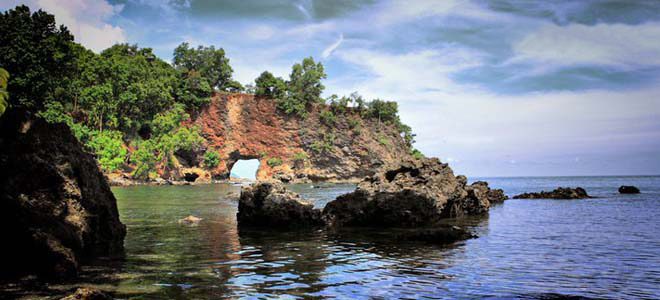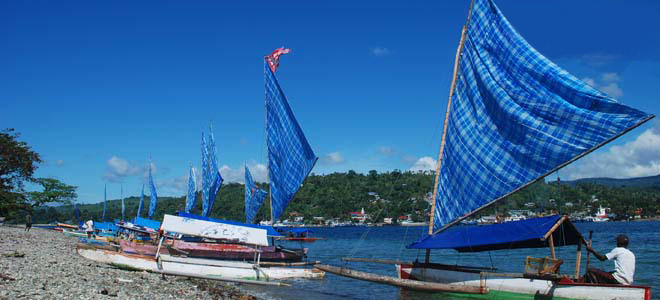
- Support to documentation and dissemination of indigenous cultures of Maluku (in collaboration with the Sejati Foundation, 1994)
- Support to documentation and archival of traditional dances of Maluku (in collaboration of the Andarinyo Center for Cultural Development, 1996)
- Support to the Nusantara Orchestra development program (through the Nusantara Orchestra Foundation, 1996) and support to development of the CSIS library and information center (CSIS, 2001)
- Construction of a community mosque in the Jampit village of Bondowoso, East Java (2000)
- Support to documentation and publication of an archeological find and excavation of 16th century merchant boat in the estuary of the Brantas river in Bojonegoro, East Java (August 2005).
- Partial assistance to two displaced families who lost their entiry house in the February 2006 landslide and flood in Kairagi, Manado.
Showing posts with label Tahija Foundation. Show all posts
Other Assistance Programs
While not directly falls into the focus areas, the Foundation from time to time diverges its resources to support activities that are viewed as essential to the well being of communities or societies at large. Such assistances include:
READ FULL POST ««
Reclamation of Former Mining Exploration Site
In 2001 the Foundation took part in a reclamation and replanting program of an area of around 72 Ha in Ella Hulu village, Upper Barito, West Kalimantan.
The site was formerly converted for exploration activities of a mineral mining company in the Austindo Group. The site was replanted with trees of economic values (acacia and rubber) that the local community can eventually utilize.
Support to Reef Fish Hatchery in Loh Mbongi
With a view to minimizing if not eliminating destructive reef fishing, and with a perspective to develop farm based local fishery, the Foundation takes part in a project to establish a reef fish hatchery in Loh Mbongi, West Flores just outside the Komodo National Park.
The hatchery is developed in tandem with village based grow-out farms such that communities surrounding the Park can switch from non-sustainable captured based fishing practices to culture based sustainable farming. This program was implemented by The Nature Conservancy in cooperation with the Komodo National Park Management Unit.
Support to Orangutan Conservation in Berau
The Tahija Foundation supports an initiative to protect orangutan habitats. Rather than excluding the local people, this initiative engages them and over time is expected to develop the communities as local resource managers.
Rather than placing conservation, communities and commercial interests as opposing factions, the initiative tries to find solution for collaborative management. The idea is to eventually excerpt the lessons and widely replicate successful approaches.
Rehabilitation of Grazing Ground
The ease off presure on the habitat of the endangered Jana Rhinoceros in the Ujung Kulon National Park, the endemic Banteng buffaloes are getting back grazing grounds that had many years been rendered unusable due to progressive incursion by invasive plants. The rehabilitation done through manual removal of the invasive plants, has shown positive reults as the use pf the grazing grounds has effectively increased over time.
This rehabilitation and the support to community based marine patrol are the indirect supports the Foundation provides to help the conservation of tha Javan Rhinoceros. The foundation in the past also initiated the marine patrol program in the park that was developed based on a model implemented by a partner orginzation in the Komodo National Park and also by the community groups in Sibesi islands in the province of Lampung
Support to Marine Patrol in the Ujung Kulon
The Foundation supports marine patrol and reef fish monitoring program. This program began in 2001 and aims to reduce pressures from excessive and destructive exploitation of resources in the marine area adjacent to the Park valued for its role as home range of the endangered Javan rhinoceros.
The marine patrol is proven to be effective to reduce illegal access to the park and poaching in both the marine and land areas. The program is being expanded to include community groups to police the sea around their own villages. The program is implemented by WWF Indonesia in collaboration with the Ujung Kulon National Park Management Unit.
Post-tsunami Aceh Rehabilitation
In the wake of the earthquake triggered tsunami in Banda Aceh, in February 2005, the Foundation launched the Assist A Village program, to quickly revive community lives in targeted sites. The program initially focused on getting two health centers (Puskesmas) running by renovating the buildings and refurbishing the centers with required furnitures and medical equipment.
The Centers were back in operation in less than 10 days since the program began, and the first center, i.e. Puskesmas Kopelma Darussalam has been handed over to the city government of Banda Aceh on May 11, 2005. The second center hand over pending completion of renovation of the adjacent facilities being done by other organization.
Provision of medical and non medical equipment
Since 1991 various sites, include several donations of equipment to hospitals i.e. a Sling Scale for the Intensive Care Unit of the Pediatric Department at RSCM/FKUI in 2001, a "Konan Portable Operating Microscope for the Ophthalmology Department of RSCM, an Intensive Care Unit for MMC Hospital, Jakarta and a Tensimeter & Stethoscopes for Sasana Tresna Wreda "Budi Mulia", Jakarta; since February 2005 in two health centers in Banda Aceh; for the Labuhan Bajo Puskesmas in August 2005.
Support to emergency and on-going programs
The Foundation working in collaboration with partner organizations provides health and sanitation services to students and general public. This includes assistance to make available on-site health professionals and free medicines (since 2002, various sites).
Most recently, in colaboration with the Indonesian Red Cross (PMI) in North Sulawesi, the Foundation assist victims of February 2006 flood and landslides in Minahasa. The Foundation provides funding for provision of free medical checks and medicine as well as household kits (assemblages of various household daily items) to help displaced families in temporary shelters resume family lives.
Project Dengue
In Yogyakarta, a key-stone research has just been concluded to test a method to control and prevent Dengue Hemorrhagic Fever. This is an effort to breakaway from the practice of being only reactive after the dengue has broken out as an epidemic. The research is expected to provide mechanism and ways to be ahead of the curve and nip the problems early on. This is a breakthrough research that may not have a direct benefit for ANJ companies but when proven successful will contribute tremendously to well being of communities at large.
The research on targeted intervention to three primary containers (Bak Mandi, Bak Air and residential wells) shown effective results in controlling the pupae but did not result in significant control of the adult Aedes aegypti nor in transmission of dengue. While the hypothesis can not be proven, results of the study and lessons learned will be published widely and the Foundation is looking into possibilities to study other compatible methods to controlling dengue.
The research was done in collaboration with the Atlanta (US) based CDC Foundation and the Faculty of Medicine of the Gadjah Mada University and full support of the government and the people of the City of Yogyakarta. To date the research already leveraged supports (in-kinds and expertise) from corporate collaborators like ESRI Corporation (GIS software), GIS Associates (GIS expertise), and Sumitomo Chemicals (IGR), and organization the Scobie & Claire Mackinnon Trust (Melbourner, Australia), Give2Asia and the Rockefeller Philanthrophy Advisors.
Renovation of 16th Century Building
The Tahija Foundation and the Banda Cultural and Heritage Foundation (Yayasan Budaya dan Warisan Banda) are collaborating to renovate a 16th century building formerly the residence of the Deputy Governor.
Support To Preserve Nusantara Culture
- Documenting and disseminating the indigenous culture of Maluku in collaboration with the Sejati Foundation, 1994
- Documenting and archiving the traditional dances of Maluku in collaboration with the Andarinyo Cultural Center, 1996
- Development support for the Nusantara Orchestra through the Nusantara Orchestra Foundation, 1996
- Development support for the CSIS library and information center, Jakarta, 2001
- Support the document a community-initiated excavation of an old wooden boat found in the Begawan river-estuary, Solo, 2005
- Support for exploration and excavation of several archeological sites and artifacts in Muntilan, Sangiran and Trowulan, as part of a longterm study examining pluralism and indigenous cultural traits throughout the Archipelago
- Support to preserve an historical gamelan set valued as part of Solo Cultural heritage, subsequently presented to the Solo Art Institute
The Jean and Julius Tahija Memorial Library
The Jean and Julius Tahija Memorial Library comprises a private collection of books, photographs, historical mementos and documents, reflecting the personal journeys and achievements of these individuals and recognizing the values that were the foundation of their accomplishments. The accomplishments of Jean and Julius Tahija are an example of how two individuals rose above the tumultuous times they lived through and practiced their values despite external pressure that might have compelled them to do otherwise.
From the mid-twentieth century, Jean and Julius began collecting books about Indonesian history as seen and described by explorers, naturalists and colonists. Over the centuries the archipelago has been influenced by diverse cultures, including Chinese, Arabian, Indian and European traders and explorers and European colonists. In the years ahead the Tahija family plans to continue collecting and preserving documents and books that describe several centuries of history of what is now the Republic of Indonesia. The collection already includes several volumes of this nature and going forward may be extended to cover a broader range of history that considers Indonesia in a regional context. The trail back in time to date has led to tomes that have been preserved and written mainly by Europeans. The library may eventually include documentation of voyages by Chinese, Arabian, and Indian explorers. To continue portraying more recent developments in Indonesia, works of contemporary Indonesian literature and history will be added to the collection.
The Library officialy opens on March 6, 2006 although access to collections is still limited and by appointments only.
Development of Learning Center in SD Mangunan
The (primary) school in Kalasan, Sleman at the outskirt of Yogyakarta was established in late 1980s by the late Romo Mangun –a great educator in his own right. The school offers a breakthrough program known as competence based which fosters communication, explorative mind, creativity and integration of both physical and mental development of students. Such approach however was shunned by the local Education Services Office so the school has to survive on its own resources.
Since the school caters to local low income families in 1998 it stopped receiving new students and was left to die slowly. In October 2001, the Foundation stepped in to assist with construction of classrooms that helped the school to revive. The Foundation donates computer and office equipment and is assisting the development of a Creation Center – a medium for teachers, students and community members to learn and expand their creative abilities to improve well being.
Improvement of Educational Infrastructures
This varies from improving a chemistry lab (Jakarta, 1994), establishment of a computer lab in a university (Ambon, 1994), provision of Braille reglet equipment (Jakarta, 1996) to construction of school and support facilities (Yogyakarta, 2001 onward; South Tapanuli, 2002 and 2005; Banda Aceh, 2005 onward).
Scholarship and Travel Grants
The Foundation provides scholarship to potential but disadvantaged young people enabling them to pursue university education, especially in areas of biological sciences and health. The scholarship in general aims to expand the skilled and talent pool of Indonesians human resources with a deep sense of responsibility to improvement of their society.
Up to the end of 2004 disbursement was done through other organization like the Yayasan Beasiswa Trisakti (Trisakti Scholarship Foundation), Dana Beasiswa Maluku (Maluku scholarship) and a Lions Club chapter in Jakarta.
In January 2005, in addition to channeling the assistance through partner organizations, the Foundation began to manage its own scholarship program. Currently the Foundation supports two groups of students attending diploma programs. The first one consists of qualified children of Austindo employees. The second group consists of students of mix background from the once-torn area of Maluku who are sent to the Trisakti Tourism Institute and must return back to Maluku to work after completing their college.
A recent example of the travel grant was the March 2005 award to a group of University Indonesia’s students to take part in the Phillip C. Jessup International Moot Court Competition. The 2005 competition was based on a hypothetical case of a marine accident near an archipelagic country during transportation of nuclear waste. The Indonesia team ranked 22nd out of 105 competing teams and the moot court proceedings is available upon request as academic reference for works in conservation of marine environment.
Vision & Mision

To help build a better Indonesia through partnership in sustainable ventures and initiatives in education, culture, health, environmental conservation, and social services.
Background

Mr. Julius & Jean Tahija
Established in Jakarta on the 20th March 1990 by the late Jean and Julius Tahija, the Tahija foundation is not for profit organization that aims to implement the philanthropic initiatives of the Tahija family and, additionally, the social responsibility initiatives of the Austindo group that fall outside the business-scope of the group’s corporate interests.
Organization
Foundation Organisation
Founders and Officers:
Mr Julius Tahija
Mrs Jean Tahija
Dr. Sjakon G. Tahija
Ir. George S. Tahija
B. 2003 – 2008
Governor: Dr. Sjakon G. Tahija
Comptroller: Ir. George S. Tahija
Chairperson: A. Wahyuhadi
Secretary: Silvia Novi (silvia@austindo.co.id)
Treasurer: Sudaryanto (sudaryanto@austindo.co.id)
C. 2008 – 2013
Governor: Dr. Sjakon G. Tahija
Comptroller: Ir. George S. Tahija
Chairperson: A. Wahyuhadi
Secretary: Silvia Novi (silvia@austindo.co.id)
Treasurer: Sudaryanto (sudaryanto@austindo.co.id)
Program Development Manager: Titayanto Pieter (pieter@austindo.co.id)
Service Manager: Sri Kurniati Pooroe (nona.pooroe@austindo.co.id)
Project Dengue Manager: Sukma Tin Aprillya (staprillya@gmail.com)
Museum Custodian: Vicky Tirajoh (Vicky@austindo.co.id)
The Logo
The logo of the foundation depicts leaves and flowerets of the Cinnamomum tahijaum Koster, which is a native cinnamon tree first discovered in Borneo and described in 1970 by Dr. A.J.G.H Kostermans, dedicated to Julius and Jean Tahija thus; “…this beautiful tree is named in honour of Mr. Julius Tahija, Chairman Managing Board of the PT Caltex Pacific Indonesia, Jakarta, who donated a substantial sum to the Herbarium Bogoriense, Bogor, for the preservation of the material, deposited in that worldwide known Institute and whose wife is immensely interested in plants and in maintaining a beautiful garden upcountry off Bogor.”For the Tahija foundation, the leaves and flowerets of the Tahija cinnamon tree represent the foundation’s core values: empathy, equality, pluralism.
Subscribe to:
Posts (Atom)


My name is Nyong Ullath. I have been currently working as an E-Commerce Supervisor at Swiss-Belhotel Manokwari International. I build and write this Blog all refers to my life, my home town, my work, Tahija Foundation (They offered me a Scholarship Program to study at STP Trisakti) and STP Trisakti "Trisakti Institute of Tourism (The University where I started to learn about tourism).